
Four Years. One Million Coaches. A Foundation for What’s Next.
When we launched the Million Coaches Challenge in 2021, we did so with a hypothesis: that training coaches in evidence-based youth development practices at scale could change the experience of young people in sport. Not just on the field, but in the ways they build confidence, find belonging, and develop the skills they’ll carry into the rest of their lives.
Four years later, with 18 national, state, and local Partner organizations, MCC has trained more than 1 million coaches. We’re proud to share Winning Beyond the Game, the Million Coaches Challenge Implementation Study—an independent, multiyear research effort conducted by the American Institutes for Research that documents what that work has produced.
What the Research Found
The study draws on one of the most extensive data sets on youth coaches to date including survey responses from more than 13,800 coaches across 18 national Partner organizations.
The findings are clear:
- 88% of coaches said training made them a better coach, gaining confidence in:
- supporting athletes’ life skills and building strong relationships
- creating inclusive environments
- supporting athletes’ mental health
- 72% believed their athletes were more likely to stay in sport
- 66% observed more joy among the young people they coach
These aren’t small gains. They represent a meaningful shift in how coaches show up and what that means for the millions of young people in their care.
Why This Matters Beyond the Numbers
One of the study’s most significant findings is one that’s harder to quantify: alignment. Across 33 trainings from 10 MCC partners, coaches were converging around the same core principles — building relationships, creating safe and inclusive environments, prioritizing effort and growth, and supporting their own well-being. In a youth sports landscape that has historically been fragmented and inconsistent, that alignment is itself a model.
The research also affirms something we’ve believed from the start: training is necessary, but not sufficient on its own. Its impact is strongest when embedded in systems — supported by mentorship, peer learning, and organizations that prioritize youth development at every level.
A Kick-off, Not a Finish Line
This work would not have been possible without the 18 Partner organizations who trained coaches, contributed data, and helped build the evidence base, as well as AIR, whose rigorous, independent research gives these findings their weight.
As Susan Crown, SCE’s founder, put it: “The question now is how we use what we’ve learned to ensure that every coach — not just the one million coaches already trained — has what they need to show up for young people.”
This study is a milestone. It also marks the beginning of MCC’s next phase, including its Calls to Action and the Empower Every Coach initiative, which focuses on building the systems-level infrastructure that makes quality coaching the norm.
Read the full report here.
The Potential Impact of One Million Coaches
In youth sports, the influence of a well-trained coach can transform the experience for young athletes, shaping their development both on and off the field. The Million Coaches Challenge (MCC) is an ambitious initiative to revolutionize youth sports by training one million coaches in youth development principles. This effort is not just about increasing the number of trained coaches, but about changing the culture of youth sports and continuing to build demand for coaches who are equipped with the skills to foster positive, inclusive, and growth-oriented sports environments.
This past month partners of the Million Coaches Challenge were in Baltimore for the Project Play Summit where we listened to leaders discuss the state of youth sports. Aspen Institute’s Sports & Society Program hosted two days of critical conversations where MCC partners were featured in conversations around understanding the impact of coach training and building a national coaches strategy. It was a great time to connect, strategize, and celebrate with leaders from across the country. MCC also got a shout out from emcee Greg Olsen!
We followed the Project Play Summit with two days of further discussion at the Million Coaches Challenge convening where members of the MCC cohort strategized on how to equip a generation of coaches with knowledge and tools about youth development techniques.
Conversations about our current efforts inspired us, but our thinking did not stop there. We looked past the immediate goal of providing evidence-based training and began cultivating the MCC legacy. We explored ways in which this group could ensure coaches are well-versed in youth development and skill-building techniques long after the challenge goal is met.
The MCC also released our Impact Statement, “The Power and Possibility of Coach Training in Youth Development”, which found that 88% of MCC coaches agree that participation in training made them better coaches. The statement underscores the significant positive impact of structured, evidence-based training programs. It features data from our dedicated partners who are committed to creating quality sports experiences for all young athletes, regardless of their background. Here are some of the highlights:
Coaches believe training is effective
Ninety percent (90%) of coaches who have completed MCC training programs are highly likely to recommend these programs to others, attesting to their effectiveness and the value they provide. Furthermore, it’s noteworthy that many coaches who undergo training in MCC partner programs also engage in coaching additional sports outside of their primary focus. This underscores the versatility and applicability of the training they receive, highlighting how it equips them with skills and insights that are transferable across various sports disciplines.
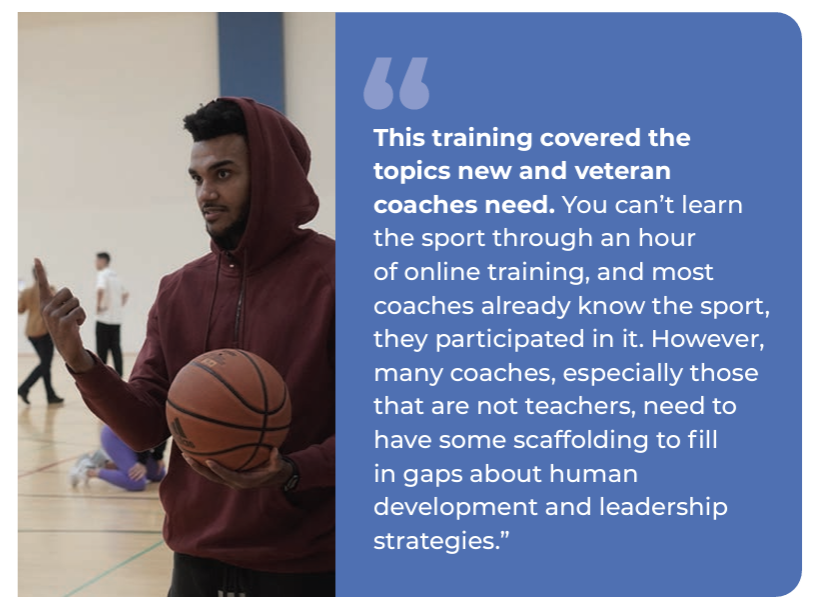
Leaders within organizations have recognized the value of trained coaches in enhancing the atmosphere of sports activities, leading to a dual focus on fun and the teaching of life skills. This approach fosters a positive environment, as evidenced by a high percentage of coaches who report that their organization’s atmosphere has improved as a result of the training they received. Additionally, these coaches experience increased enjoyment in their roles, further highlighting the benefits of specialized training in creating a more engaging and beneficial sports experience for all involved.
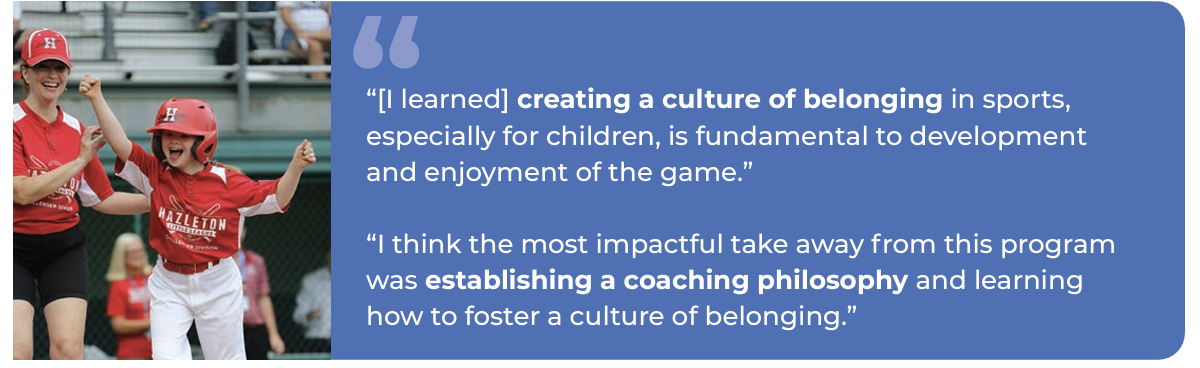
Young People want Consistency
Youth perspectives highlight the importance of consistent coaching, and leaders believe trained coaches are more likely to continue their involvement season after season. This continuity is partly attributed to the perception of adequate training, with many coaches, especially those from programs like Girls on the Run, feeling well-prepared and thus more inclined to return to their roles. When describing their experiences, the words “supportive,” “fun,” and “positive” emerge most frequently from coaches, painting a picture of a rewarding and enjoyable coaching environment.
74% of responding coaches perceived that their participation in training had a positive influence on athlete retention (American Institutes for Research, 2024).
A Call to Action
For coaches – it’s crucial to remain at the forefront of youth development by actively participating in training programs designed with a youth-centric approach. Aligning with organizations that not only prioritize but also offer comprehensive training programs in this area can significantly enhance a coach’s effectiveness. Moreover, the landscape of youth development is ever-evolving, necessitating a commitment to continuous learning and skill updating to meet the latest needs.
For Families and caregivers – you play a pivotal role in the athletic and personal development of young athletes. Choosing programs where coaches have undergone training in youth development is essential. Moreover, advocating for the prioritization of coach training within community sports programs can lead to a more enriching environment for young athletes. Sharing and promoting information about available training opportunities with community sports leaders can further enhance the quality of coaching.
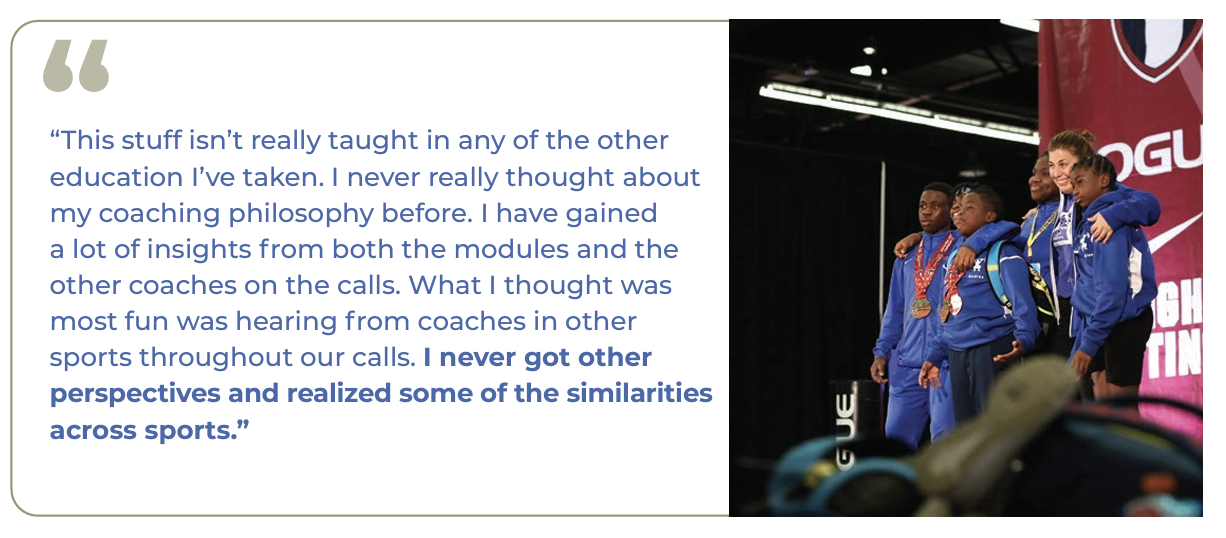
For Sports programs and organizations – you have a responsibility to ensure coaches are well-prepared to meet the needs of youth development. This involves providing access to and encouraging participation in training programs designed to address these needs. By continuously seeking out new training opportunities, programs can stay ahead of the curve. Furthermore, advocating for the importance of coach training across different regions, sports, and networks can elevate the standard of coaching universally.
For funders and philanthropists – investing in training programs that prioritize evidence-based approaches to coach training is crucial. This not only elevates the quality of coaching but also ensures that young athletes receive the best possible guidance and support. Supporting organizations dedicated to offering high-quality, evidence-based training programs can make a significant impact on the sports ecosystem, fostering an environment where young athletes can thrive.
The Million Coaches Challenge is more than just a numerical goal; it’s about changing the narrative around coaching. By training one million coaches, MCC is helping to build a legacy where every young athlete has access to a quality coach who prioritizes their development and well-being. Join the Million Coaches Challenge today and be part of this transformative movement. To learn more about MCC and its partners, visit https://www.millioncoaches.org/